**92-Year-Old Man Convicted of 1967 Rape and Murder in Britain’s Oldest Cold Case to Be Solved**
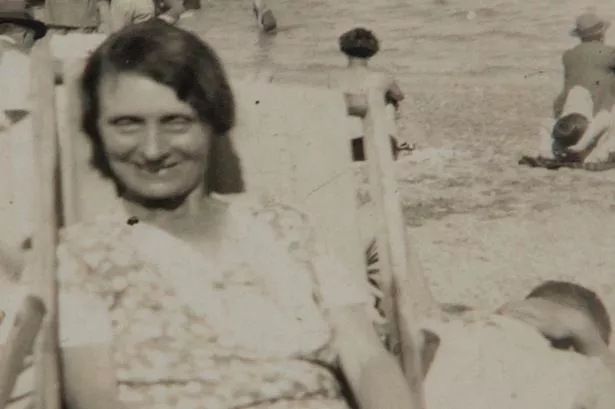

A 92-year-old man has been convicted for the 1967 rape and murder of a 75-year-old widow in Bristol, bringing closure to what is widely believed to be the United Kingdom’s longest-running unsolved murder investigation. Ryland Headley was found guilty in a Bristol Crown Court on Monday, decades after the original crime shocked the community and left investigators searching for answers.
Louisa Dunne, a mother of two who had been widowed twice, was killed in her home on Britannia Road, Easton, in June 1967. Her body was discovered by neighbours after reports of a woman’s screams emanated from the house in the early morning hours. At the time, Dunne was living alone, having converted her front room into a bedroom, where she was later found lying on a heap of clothing. Notably, the police found no evidence of a drawn-out struggle within the property.
The original inquiry was hampered by limited forensic techniques. Although investigators collected swabs from Dunne’s body and a palm print from an upstairs window, scientific analysis in the 1960s was not advanced enough to provide strong leads. More than 19,000 men and boys had their prints compared to that recovered at the scene, but the key piece failed to yield a match for decades.
It was not until recent years that a re-examination of collected case evidence using advanced DNA technology led to a breakthrough. Avon and Somerset Police sent several preserved items, including Dunne’s clothing, for new forensic analysis in 2023. Crucially, traces of DNA found on the victim’s skirt provided a conclusive match to Ryland Headley—an outcome experts stated was “a billion times more likely to be his than anyone else’s”.
Headley, who had resettled in Suffolk by the time of his arrest in 2024, had a prior record of violent offences, including the rape of two elderly women in 1977. Despite these convictions, he had never been connected to the Bristol murder due to gaps in earlier police records; his palm print was never taken during the original search as he had moved just outside the area of focus shortly after the killing.
During the trial, the court heard grim details from the pathologist who examined Mrs Dunne, with evidence pointing to death by asphyxiation, having been strangled with a scarf and smothered. Headley maintained his innocence throughout, declining to testify and telling police upon his arrest, “I don’t know what you are talking about. Very strange, very strange.” His legal team argued that he had no memory of ever meeting Dunne or being in her home.
The jury, whose service was recognised by Mr Justice Sweeting as particularly distressing, took nearly ten hours of deliberation to return guilty verdicts on both charges. The judge further noted the public interest in the case and reminded jurors of their right to be excused from future service given the traumatic nature of the proceedings.
Headley’s conviction not only closes a chapter for Louisa Dunne’s family after 57 years but also casts a shadow over other potential unsolved cases. Detective Inspector Dave Marchant of Avon and Somerset Police revealed that coordinated efforts were now underway with national authorities to ascertain whether Headley could be linked to additional historic offences, given similarities between the attacks and his past criminal admissions.
This case underscores the critical role advances in forensic science now play in delivering justice, even decades after crimes occur. DNA evidence—unimaginable to the original 1960s investigators—proved pivotal to ending Britain’s oldest cold case. As police continue to sift through other unsolved files, the Dunne case stands as testimony to the enduring determination of law enforcement, as well as the patience of families waiting for resolution.
Sentencing for Headley is scheduled for Tuesday, when he will face justice for the crimes that haunted Bristol for generations. The gravity of the conviction has triggered fresh investigations nationwide, with hope that modern detection can illuminate other cold cases left in the shadows of British legal history.