**Eluned Morgan Responds to ‘Unfortunate’ UK Labour Remarks Over Wales Rail Funding Row**
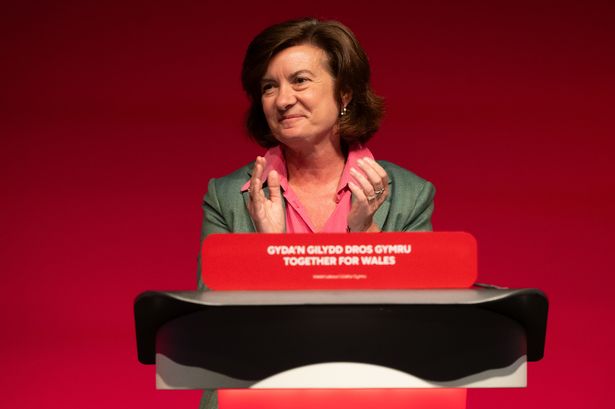
Wales’ First Minister, Eluned Morgan, has spoken out following controversial remarks from a senior UK Government minister suggesting Wales should be “grateful” for the recent rail funding it received from Westminster. The comments have sparked a fresh debate about the relationship between the UK and Welsh Governments, particularly in respect to long-standing concerns over fair investment and devolution.

The issue came to the fore during an interview with BBC Radio Wales’ Sunday Supplement, where Baroness Morgan was questioned about ongoing tensions over infrastructure funding. The row was first ignited after the UK Government’s spring statement back in March, which included a £445 million funding package earmarked for rail investment in Wales. While the announcement was broadly welcomed by Welsh Labour politicians as a step in the right direction, many believe the sum falls far short of what is truly needed to tackle historical underfunding of Welsh railways.

Key questions still hang over the details of the funding, including how exactly the money will be allocated and how much will be directed specifically towards the five newly promised stations in Cardiff, Newport, and Monmouthshire. The lack of clarity has frustrated many within the Senedd and prompted critics to point out that the funding package alone will not redress decades of overlooked infrastructure needs.
The controversy was further fuelled when Darren Jones, the Chief Secretary to the Treasury, addressed concerns in the House of Commons raised by David Chadwick, Wales’ only Liberal Democrat MP. Chadwick highlighted the perception that Wales has been left short-changed, particularly due to certain rail projects being classed as “England and Wales” undertakings—an accounting method widely criticised for its impact on the Welsh allocation.
In response, Mr Jones asserted that the funding offered by the current government represents the “largest real terms increase in spending in Wales since devolution began.” He added: “You might want to be a little more grateful in future.” This particular phrasing drew significant criticism from opposition politicians and the Welsh public alike. Chadwick later called the minister’s remarks “gobsmackingly arrogant,” suggesting they betray just how disconnected Westminster can be from the realities facing Wales. Plaid Cymru’s Liz Saville Roberts was similarly forthright, branding the comments “arrogant and insulting”.
When asked by host Vaughan Roderick if the comments reflected the prevailing view of Wales in London, Eluned Morgan described the remark as “an unfortunate turn of phrase.” While not directly confronting Westminster’s stance, she sought to emphasise the importance of recent progress. “If you compare what we were given before with relation to rail to what we’re getting now, that’s a substantial increase. Is it enough? No,” she admitted candidly. Morgan did note, however, that the funding announcement marks a starting point rather than a final solution, and went as far as to say that there has been a commitment for further support in the future.
The debate over railway investment touches on broader questions around the equitable distribution of funds within the union, especially as calls for further Welsh devolution gain momentum. Both the Welsh and UK Governments now formally acknowledge the historic underfunding of Welsh rail, yet the mechanisms to rectify this remain a major point of contention.
Public reaction within Wales has been strong, with many residents and political commentators expressing their dismay both at the perceived slight by Westminster and the ongoing uncertainty surrounding infrastructure investment. These emotions reflect deeper frustrations over how Wales’ needs are addressed—or overlooked—across Whitehall.
As discussions continue, the Welsh Government faces the dual challenge of pressing for greater clarity and commitment from Westminster while also managing public expectations about what can be realistically delivered in the short term. Meanwhile, opposition parties are using the episode as further evidence to bolster their arguments for increased autonomy and a fairer funding settlement.
Looking ahead, there are likely to be continued calls for greater transparency, parity and respect in relations between Cardiff and London—demands that go far beyond railways, touching upon the fundamental nature of governance and representation within the United Kingdom.